
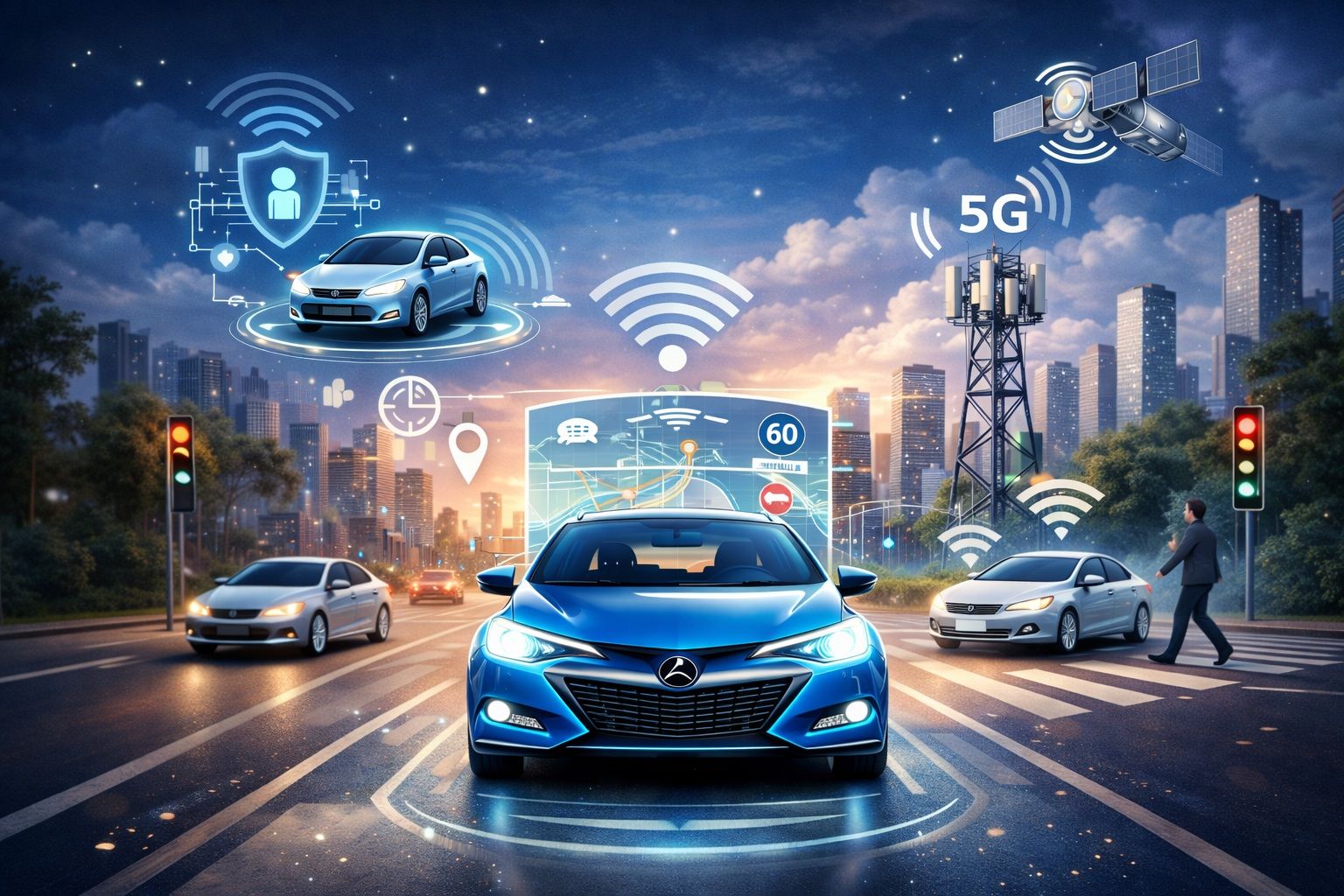
The connected car market is rapidly transforming the automotive industry by integrating vehicles with digital communication technologies such as telematics, IoT, and vehicle-to-everything (V2X) connectivity. These technologies enable real-time data exchange between vehicles, infrastructure, and cloud platforms, enhancing safety, navigation, and user experience.
The Connected Car Market is evaluated at a valuation of $96.64 billion in 2024 and is projected to expand at a CAGR of 17.94% to reach $503.13 billion by 2034.
What Are the Key Drivers of the Connected Car Market?
- Rising Demand for Smart Mobility: Consumers increasingly expect advanced digital features in vehicles, including real-time navigation, remote diagnostics, and seamless infotainment. These capabilities enhance driving convenience and safety, driving the adoption of connected vehicles globally.
- Growth of 5G and IoT Infrastructure: The expansion of 5G networks and IoT ecosystems is enabling faster data transmission and reliable connectivity for vehicles. This allows advanced services such as over-the-air updates, predictive maintenance, and intelligent mobility systems.
- Increasing Focus on Vehicle Safety and Regulations: Governments worldwide are introducing stricter safety and emission regulations. Technologies like advanced driver assistance systems (ADAS) and telematics are becoming standard in modern vehicles, accelerating market growth.
- Growing Adoption of Electric and Autonomous Vehicles: Electric and autonomous vehicles rely heavily on real-time connectivity and data exchange. As these vehicle segments expand, they further strengthen the demand for connected car technologies.
Why Is the Driver Assistance Segment Dominating the Connected Car Market?
The driver assistance segment holds a dominant position in the connected car market, primarily due to the rising integration of advanced driver assistance systems (ADAS) that improve both vehicle safety and overall driving performance. Technologies such as adaptive cruise control, lane departure alerts, automatic emergency braking, and blind-spot detection are increasingly being incorporated as standard features in modern vehicles. This growth is largely supported by stricter government safety regulations and increasing consumer demand for safer driving experiences. As autonomous driving technologies continue to evolve, the combination of artificial intelligence and real-time vehicle-to-everything (V2X) communication is expected to accelerate the adoption of driver assistance solutions, further strengthening their leading role in the market.
Request A Sample for Connected Car Market - Focus on Application, Vehicle Type, Network Type, Sales Channel, Form, Transponder, Hardware, and Country-Level Analysis and Forecast, 2024-2034
What Key Trends Are Shaping the Connected Car Market?
- Integration of AI and Software-Defined Vehicles: Automakers are increasingly embedding AI-driven platforms into vehicles to enable predictive maintenance, automated driving support, and personalized user experiences.
- Vehicle-to-Everything (V2X) Communication: V2X technology allows cars to communicate with other vehicles, infrastructure, and networks, improving traffic efficiency and road safety. This technology is becoming a critical component of next-generation transportation systems.
- Connected Ecosystems with Smart Homes: Connected cars are evolving into part of a broader digital ecosystem. Integration with smart home platforms enables drivers to control home devices, lighting, and security systems directly from their vehicles.
- In-Car Connectivity for Productivity: Emerging solutions such as embedded eSIM connectivity are turning vehicles into mobile workspaces, allowing passengers to access secure internet services and business applications while traveling.
What Challenges and Opportunities Exist in the Connected Car Market?
Challenges
- Connectivity Infrastructure Limitations: Many developing regions lack sufficient 5G coverage and roadside communication infrastructure, limiting the performance of connected vehicle systems.
- Cybersecurity and Data Privacy Risks: As vehicles become more connected, the risk of cyberattacks and unauthorized data access increases, requiring stronger security frameworks.
- High Implementation Costs: Integrating advanced communication hardware, sensors, and cloud services can increase vehicle production costs, slowing adoption in price-sensitive markets.
Opportunities
- Smart City Integration: Connected vehicles can interact with traffic management systems, improving urban mobility and reducing congestion.
- Usage-Based Insurance Models: Telematics data enables insurers to offer personalized premiums based on real driving behavior.
- Digital Service Monetization: Automakers can generate recurring revenue through connected services such as navigation subscriptions, software updates, and entertainment packages.
These opportunities highlight why many stakeholders are beginning to Invest in Connected Car Market solutions to capitalize on the expanding digital mobility ecosystem.
Click Here to Download the ToC
Conclusion
The connected car market represents one of the most significant technological shifts in the automotive sector. With vehicles evolving into intelligent digital platforms, companies across automotive, telecommunications, and software industries have new opportunities to innovate and generate revenue. Organizations that Invest in Connected Car Market technologies today are positioning themselves at the forefront of the next generation of smart mobility solutions.